AIP Wire Analysis, New York.
Despite the recent inauguration of Myanmar’s new president, the country’s policy toward Bangladesh appears to remain steady, signaling continuity in bilateral relations. Analysts note that ongoing cooperation on border management, trade, and refugee issues is expected to persist, with no immediate shifts in diplomatic strategy. The move underscores Myanmar’s preference remain the same its regional engagements, even amid leadership transitions.
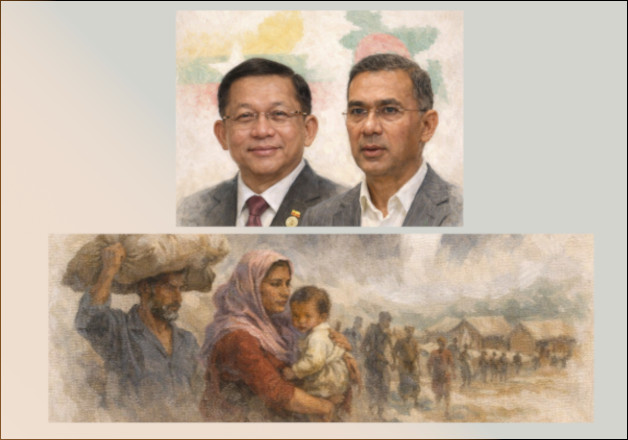
The election of Min Aung Hlaing as President of Myanmar formalizes the military’s long-standing dominance over the country, marking a continuation of policies established since the 2021 coup. Under his leadership, the Tatmadaw maintains firm control over the political apparatus, limiting opportunities for inclusive governance or meaningful political reform. This consolidation of military authority carries significant implications for Myanmar’s domestic stability and for its relations with neighboring countries, particularly Bangladesh.
For Bangladesh, the continuity of military-led rule in Myanmar presents a complex diplomatic and humanitarian challenge. The Rohingya refugee crisis remains unresolved, with over one million people living in camps along the Bangladesh–Myanmar border. Efforts toward voluntary repatriation have stalled repeatedly, largely due to concerns over safety, citizenship rights, and the political climate in Myanmar. The new Bangladeshi administration, under Prime Minister Tarique Rahman, inherits these enduring challenges, balancing domestic priorities with obligations toward humanitarian protection and regional stability.
The ongoing civil conflict in Myanmar further complicates the bilateral relationship. Ethnic armed groups and resistance forces continue to contest military authority in several regions, creating persistent security risks along the shared border. For Dhaka, these dynamics necessitate careful border management and ongoing vigilance to prevent cross-border tensions while maintaining essential trade and transit links.
Strategically, Bangladesh’s engagement with Myanmar under Min Aung Hlaing must navigate a delicate balance. Diplomatic dialogue remains important, but the prospects for significant breakthroughs are constrained by Myanmar’s entrenched military governance. As such, Bangladesh may need to emphasize multilateral engagement, regional forums, and international pressure to promote accountability and human rights protections, particularly for the Rohingya population.
In this context, the Rohingya issue remains central to Bangladesh–Myanmar relations. While Bangladesh’s domestic political landscape has changed with its newly elected leadership, the core imperatives — safeguarding refugees, maintaining border security, and advocating for political solutions in Myanmar — remain consistent. The diplomatic approach will require patience, strategic coordination with international partners, and a sustained focus on humanitarian outcomes.
Ultimately, Min Aung Hlaing’s presidency signals continuity rather than change in Myanmar’s foreign and domestic policies. For Bangladesh, this underscores the importance of measured, proactive engagement that balances humanitarian concerns, regional security interests, and long-term strategic objectives. The evolving political landscape presents both challenges and opportunities for Bangladesh to assert its role as a regional actor capable of shaping outcomes in the face of a complex neighbor.