Sadik Sagar, Dhaka:
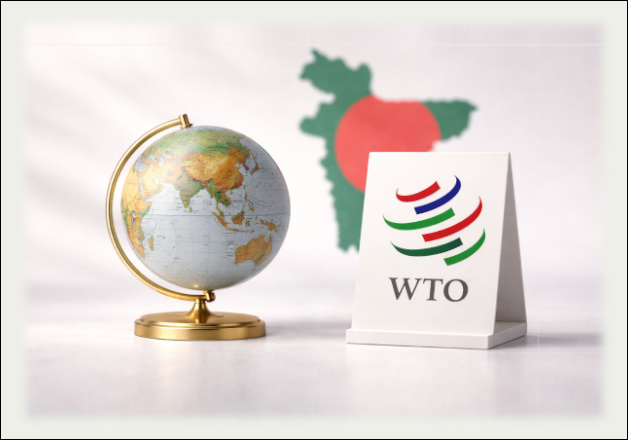
Bangladesh has called for measured reform of the World Trade Organization (WTO), stressing that any changes must preserve the institution’s foundational principles amid growing strains on the global trading system.
Speaking at the 14th WTO Ministerial Conference in Yaounde, Commerce Minister Khandakar Abdul Muktadir highlighted the need to adapt the WTO to contemporary challenges without weakening its rules-based, consensus-driven framework. His remarks come at a time when rising protectionism and unilateral trade measures are testing the credibility of multilateral trade governance.
A central concern raised by Bangladesh is the increasing departure from core WTO norms such as non-discrimination and inclusivity. Mechanisms like most-favoured-nation (MFN) treatment, duty-free quota-free access and special and differential treatment (S&DT) for developing and least developed countries have historically enabled more equitable participation in global trade. Dhaka’s position suggests that reform efforts should reinforce—rather than dilute—these principles.
Analytically, Bangladesh’s stance reflects a broader anxiety among developing economies over the erosion of multilateral discipline. The recent trend of unilateral tariff impositions, particularly by major economies such as the United States, has introduced uncertainty and weakened the predictability that the WTO framework was designed to ապահով. Such measures risk triggering retaliatory actions, potentially fragmenting global trade into competing blocs.
Trade expert Mustafizur Rahman of the Centre for Policy Dialogue pointed to the near paralysis of the WTO’s dispute settlement system—often described as its “jewel in the crown”—as a critical institutional gap. Without an effective enforcement mechanism, rules risk becoming less binding, further undermining trust among member states.
He also warned that the growing use of “reciprocal tariffs” above MFN levels could distort competitiveness. Hypothetically, if such formulas were widely applied, Bangladesh could face significantly higher tariff barriers in key markets, including the European Union, where its export surplus is substantial.
Beyond tariff dynamics, structural challenges are also emerging. Concerns over future cotton supply disruptions, particularly as African producers move up the value chain, highlight Bangladesh’s vulnerability in global supply networks. At the same time, policy advice from the Enhanced Integrated Framework underscores the urgency of improving the investment climate and diversifying exports ahead of Bangladesh’s graduation from least developed country status.
Overall, Bangladesh’s position signals a careful balancing act: advocating necessary WTO reforms while defending the multilateral principles that underpin fair and predictable global trade.