By Tanvir Rusmat, Dhaka:
Speaking at a post-election press conference ahead of forming government, Mr. Tarique Rahman, representing the majority party, set out what he described as a “people-centred and national interest-driven” foreign policy for Bangladesh, pledging that Dhaka would not lean towards any single power but pursue ties based on mutual respect, equality and pragmatic interests.
International observers see the remarks as a potential recalibration in South Asia’s delicate geopolitical balance. An analysis by Reuters suggested that any policy reset in Dhaka could reshape calculations between China’s expanding economic footprint and India’s long-standing security sensitivities in the region. Al Jazeera, meanwhile, described the election outcome as opening a possible “new chapter” in South Asian strategic dynamics, while cautioning that the true test will lie in concrete policy decisions rather than rhetoric.
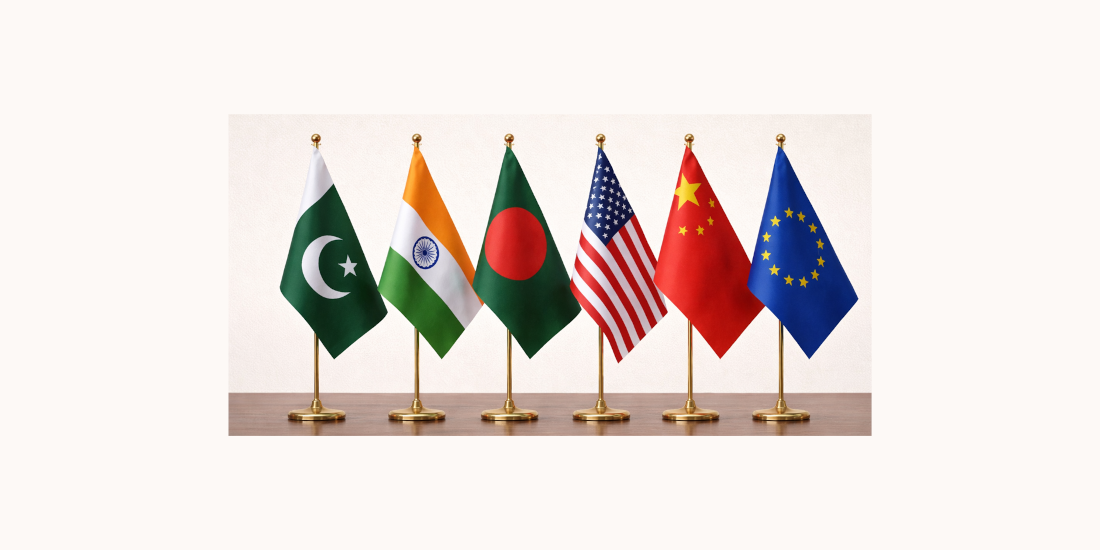
On relations with the United States, diplomatic analysts argue that Washington is likely to prioritise stability, democratic standards and cooperation under its Indo-Pacific framework. International media commentary indicates that if Dhaka’s “Bangladesh First” posture translates into policy transparency and economic reform, there could be renewed momentum in trade and security engagement.
The European Union has already expressed interest in deepening its partnership with Bangladesh, particularly in trade preferences, green transition initiatives and labour standards. European diplomatic circles suggest that demonstrable reform commitments by the incoming government would further institutionalise ties.
In India, strategic commentators have struck a tone of cautious optimism. Indian media analyses note that continuity in border management, connectivity and trade would help preserve stability, though issues such as water sharing and security cooperation could test mutual trust under a recalibrated framework.
China remains central to Bangladesh’s infrastructure and investment landscape. Observers say Dhaka may adopt a more measured approach to project viability and debt exposure, even as development cooperation with Beijing is expected to continue.
As for Pakistan, regional analysts point to the possibility of limited warming in communication and trade. Yet historical sensitivities and the broader India equation are likely to ensure a careful and calibrated diplomatic posture from Dhaka.
Taken together, Mr. Rahman’s stated doctrine places strategic autonomy and interest-based engagement at its core. International observers suggest that implementation — rather than declaration — will determine whether Bangladesh can navigate intensifying regional competition while preserving policy independence and economic resilience.