Sagar Rahman, Dhaka:
The Bangladesh Nationalist Party (BNP) government has initiated a sweeping reshuffle at the Ministry of Foreign Affairs, marking its most significant diplomatic restructuring since assuming office in February. The planned changes, involving the Foreign Secretary and several key overseas missions, indicate an effort to align Bangladesh’s foreign policy machinery with the new administration’s strategic priorities while preparing for a busy international calendar.
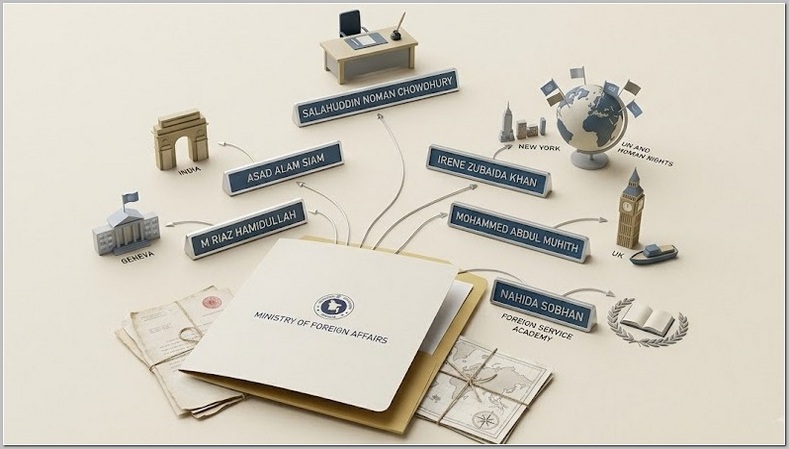
At the center of the reshuffle is the expected appointment of Bangladesh’s Permanent Representative to the United Nations in New York, Salahuddin Noman Chowdhury, as the next Foreign Secretary. If implemented, incumbent Foreign Secretary Asad Alam Siam is likely to become Bangladesh’s High Commissioner to India, replacing M Riaz Hamidullah, who is expected to move to Geneva as Permanent Representative. Nahida Sobhan, currently serving in Geneva, is set to return to Dhaka as Rector of the Foreign Service Academy.
The restructuring goes beyond routine diplomatic rotations. It reflects the BNP government’s intention to place trusted and experienced diplomats in strategically important capitals while recalibrating foreign policy after the political transition earlier this year. New Delhi, London, New York and Geneva remain Bangladesh’s most influential diplomatic postings due to their significance in bilateral relations, multilateral diplomacy, trade, migration and human rights engagement.
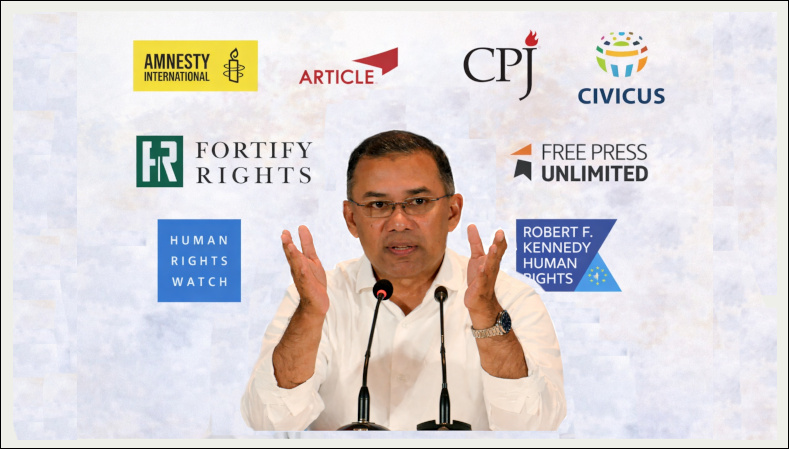
One of the most notable appointments is that of renowned human rights advocate Irene Zubaida Khan as Bangladesh’s Permanent Representative to the United Nations in New York with the status of a state minister. Her appointment is widely viewed as a signal that Dhaka intends to strengthen its engagement on international human rights issues and improve its diplomatic profile ahead of the United Nations General Assembly (UNGA) session in September.
The appointment of Mohammed Abdul Muhith as High Commissioner to the United Kingdom also underscores the government’s emphasis on strengthening ties with one of Bangladesh’s largest diaspora communities and an important trade and investment partner.
Since taking office, the BNP government has already replaced several ambassadors appointed during the interim administration and named new envoys to Ireland, Argentina and Denmark. The continued vacancy in missions such as Singapore and Iran, however, suggests that the broader diplomatic overhaul is still underway.
The unresolved case of Bangladesh’s High Commissioner to the Maldives, Md Nazmul Islam, who remains in office despite earlier instructions to return, highlights that administrative and contractual issues continue to accompany the transition.
Overall, the reshuffle represents more than a personnel change. It reflects the BNP government’s effort to establish greater policy coherence, reinforce key diplomatic missions and position Bangladesh more effectively on regional and global platforms. The effectiveness of these appointments will ultimately be judged by their ability to advance Bangladesh’s strategic interests amid an increasingly complex geopolitical environment.