Special Correspondent, Dhaka:
China’s latest missile test into the Pacific Ocean has drawn attention across the Indo-Pacific, prompting reactions from several regional governments despite Beijing’s description of the launch as part of its routine annual military training.
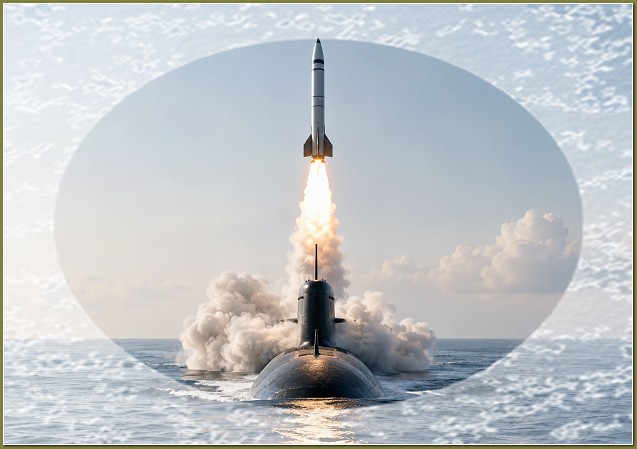
According to China’s state-run Xinhua News Agency, a nuclear submarine of the People’s Liberation Army Navy (PLAN) launched a missile carrying a dummy warhead into designated international waters in the Pacific. Chinese authorities stated that the exercise was a regular training activity and was not directed at any specific country or target.
Ahead of the launch, China notified several neighboring countries, including Australia and Japan. Nevertheless, the test prompted concerns over regional security. Australia described the launch as a destabilizing development, citing broader concerns about China’s expanding military capabilities and the need for greater transparency. Japan said it had expressed concern over increased Chinese military activity, while New Zealand noted that it viewed the missile test as an unwelcome development for the South Pacific.
The launch comes at a time when strategic competition in the Indo-Pacific continues to shape regional security dynamics. Military modernization efforts by major powers, including China, the United States, and other regional actors, have increased the importance of confidence-building measures and transparent communication to reduce the risk of misunderstanding or unintended escalation.
From a strategic perspective, the test demonstrates China’s continued investment in strengthening its maritime and long-range defense capabilities. Submarine-launched missile systems are considered an important component of a country’s strategic deterrence because they enhance operational flexibility and survivability.
Although the missile reportedly landed in international waters and advance notification was provided, the differing responses from regional governments illustrate the sensitivity surrounding military activities in the Indo-Pacific. Countries across the region continue to emphasize the importance of transparency, dialogue, and adherence to international norms to maintain regional stability.
As military capabilities continue to evolve, such exercises are expected to remain a feature of the Indo-Pacific security environment. The broader challenge for regional stakeholders will be balancing national defense priorities with sustained diplomatic engagement to preserve stability and reduce the potential for strategic miscalculation.