Anwar Shahadat, New York.
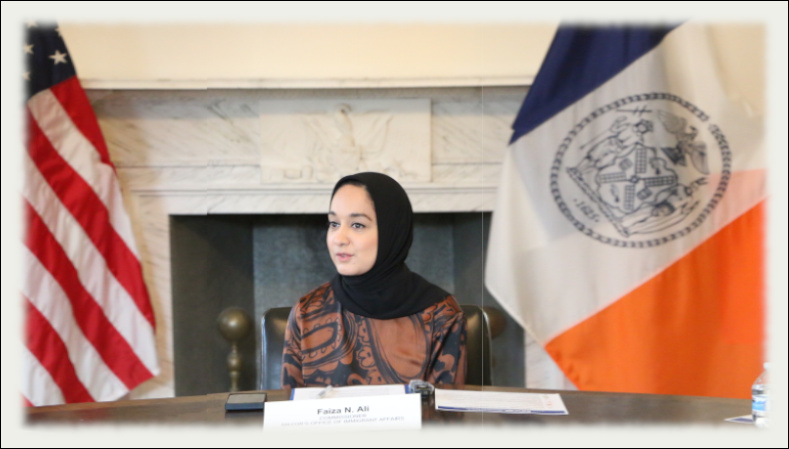
City officials convened an ethnic media roundtable to discuss New York City’s Preliminary Citywide Racial Equity Plan and the development of a “True Cost of Living” measure, highlighting efforts to address economic disparities and improve quality of life for underserved communities.
The event, led by the Deputy Mayor for Economic Justice along with the New York City Mayor’s Office on Immigrant Affairs (MOIA) and the New York City Mayor’s Office of Equity & Racial Justice (MOERJ), marked the kickoff of Immigrant Heritage Week. Officials outlined plans to gather public feedback before finalizing the equity plan for implementation.
The discussion also introduced the city’s “True Cost of Living” measure, which aims to assess what residents need to meet basic necessities and live with dignity in New York City.
“Immigrants are at the center of this plan,” said MOIA Commissioner Faiza Ali. “Our goals include expanding access to financial capital for underserved communities, protecting access to healthcare regardless of immigration status, and ensuring safe and affordable housing for all New Yorkers.”
Ali emphasized that disparities identified in both the Racial Equity Plan and the cost-of-living analysis significantly affect immigrant communities. She underscored the importance of coordination among city agencies to address these challenges effectively.
“As we kick off Immigrant Heritage Week, we recognize that the challenges facing immigrant communities are closely tied to broader racial inequities across our city,” said Chief Equity Officer and MOERJ Commissioner Afua Atta-Mensah. “Through this plan, we are reaffirming our commitment to investing in underserved communities by advancing affordability and centering their voices in policymaking.”
Officials described the plan as a collaborative effort focused on affordability, inclusion, and equitable access to resources. The framework aims to address long-standing disparities and guide how city agencies serve historically marginalized populations.
Deputy Mayor Maria Torres-Springer emphasized the importance of inclusive economic policymaking, noting that integrating MOIA and MOERJ under the Economic Justice portfolio reflects the administration’s commitment to supporting vulnerable communities and strengthening economic well-being citywide.
Commissioner Atta-Mensah also outlined the broader framework of the Racial Equity Plan, which seeks to reduce disparities and ensure that historically marginalized communities are prioritized in policy development and implementation.
Commissioner Ali reiterated that all immigrant New Yorkers have the right to access city services without fear, regardless of immigration status. She highlighted the growing affordability challenges facing immigrant communities and stressed the importance of addressing inequality through an economic justice lens.