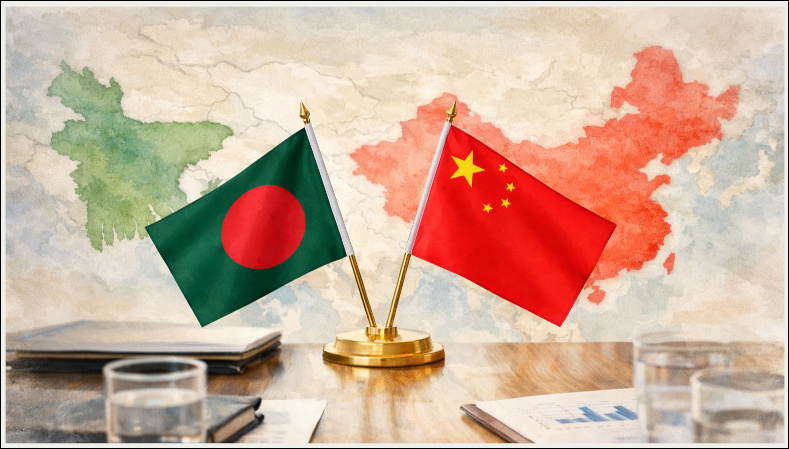

By Tanvir Rusmat, Dhaka. Bangladesh’s upcoming 13th National Parliamentary Election is no longer viewed as merely a domestic political exercise; it is increasingly emerging as a geopolitical event. Amid shifting power balances in the Indo-Pacific, growing concerns among Western democratic blocs, and Bangladesh’s strategic location, the election has become a significant subject in international diplomacy. Active engagement by the European Union (EU) and the United States, alongside commentary from domestic policy think tanks, underscores this reality.
The presence of the EU Election Observation Mission goes beyond a technical assessment of electoral procedures; it carries a clear diplomatic message. The EU has repeatedly stated that it considers Bangladesh an important partner, but that partnership rests on democratic standards, political inclusiveness, and civil liberties. EU observers are placing emphasis on the overall electoral environment, the ability of opposition parties to campaign freely, media independence, and the participation of minorities and marginalized communities—effectively positioning the election as a test of international credibility.
The Chief Observer of the EU Election Observation Mission, Ivars Ijabs, has expressed hope that the election will be “free, fair and peaceful,” noting that the mission will operate independently and impartially. He indicated that the EU would closely monitor the participation of women, youth, and minority groups, as well as the role of media and social media infrastructure and voter security. The mission’s activities will extend beyond polling day, gathering comprehensive information on the broader electoral process.
The United States has adopted a cautious yet strategic posture. Publicly refraining from supporting any political side, Washington has called for elections that are “free, fair, and inclusive,” signaling that the nature of post-election relations will depend significantly on the credibility of the process. Human rights, governance, and political pluralism have become increasingly central to U.S. policy in South Asia, particularly in the context of intensifying U.S.-China competition.
In this international context, the Center for Policy Dialogue (CPD) has framed the election at the intersection of domestic realities and global expectations. The think tank has warned that limited political participation or the exclusion of major political forces could undermine the election’s legitimacy both domestically and internationally. CPD has further argued that economic reforms, discipline in the banking sector, and employment generation will be crucial for the next government to maintain international confidence. CPD distinguished fellow Debapriya Bhattacharya has cautioned that although the announcement of the election schedule has generated voter interest, concerns about transparency and neutrality persist, and the Election Commission must address these doubts.
Geopolitically, Bangladesh heads into the election at a time when Western powers increasingly view democracy as a strategic instrument, while regional actors often prioritize stability, even if tightly managed. As such, this election is not solely about a transfer of power; it may shape the diplomatic language Bangladesh adopts and the partnerships it prioritizes in the years ahead.
Taken together, international observations and domestic analyses suggest that the 2026 election is more than a procedural event. It represents a diplomatic litmus test—one that will influence not only government formation but also Bangladesh’s international standing, geopolitical positioning, and strategic autonomy.